We use cookies to ensure our site functions properly and to store limited information about your usage. You may give or withdraw consent at any time. To find out more, read our privacy policy and cookie policy.
Manage Cookies
A cookie is information stored on your computer by a website you visit. Cookies often store your settings for a website, such as your preferred language or location. This allows the site to present you with information customized to fit your needs. As per the GDPR law, companies need to get your explicit approval to collect your data. Some of these cookies are ‘strictly necessary’ to provide the basic functions of the website and can not be turned off, while others if present, have the option of being turned off. Learn more about our Privacy and Cookie policies. These can be managed also from our cookie policy page.
Strictly necessary cookies(always on):
Necessary for enabling core functionality. The website cannot function properly without these cookies. This cannot be turned off. e.g. Sign in, Language
Analytics cookies:
Analytical cookies help us to analyse user behaviour, mainly to see if the users are able to find and act on things that they are looking for. They allow us to recognise and count the number of visitors and to see how visitors move around our website when they are using it. Tools used: Google Analytics
How can we support patients during radiotherapy and imaging?
Share How can we support patients during radiotherapy and imaging? on FacebookShare How can we support patients during radiotherapy and imaging? on X (formerly Twitter)Share How can we support patients during radiotherapy and imaging? on LinkedinEmail How can we support patients during radiotherapy and imaging? link
This stage of the project has now finished.
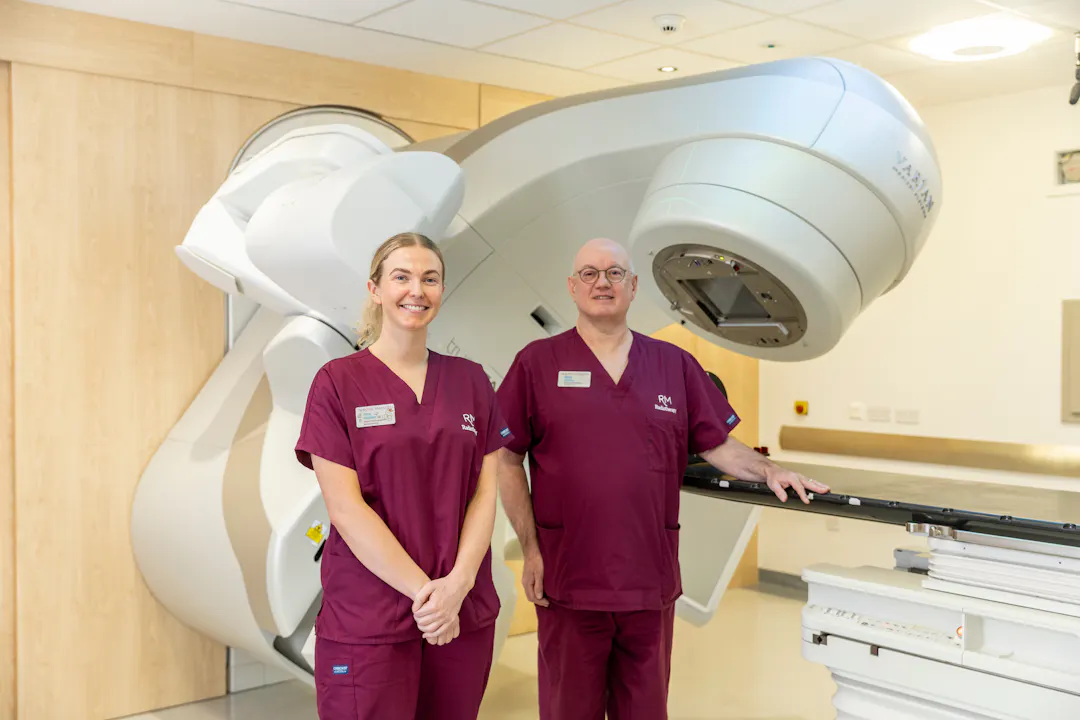
Radiotherapy is an important part of cancer treatment, used by about half of people diagnosed with cancer. We want to continue improving how we support patients during radiotherapy and imaging (eg. MRI scans), building on what we have learned so far.
During radiotherapy or imaging scans, patients have to lie alone in the room while the scan or treatment is taking place. This can feel lonely and can make some people feel more anxious.
Our work so far has focused on a soft robotic touch device. This is a small, gentle device made from soft, flexible materials that can give a light, comforting touch or pressure to the body. It is designed to feel a bit like a reassuring hand resting on you. Feeling a gentle touch, or a sense that someone is “there”, can be comforting for some people and may help to reduce feelings of anxiety during these procedures. This work has been co‑designed with patients, carers, and healthcare professionals through focus groups and early design activities, ensuring that patient experience is central to the approach.
We recognise that no single solution works for everyone. As part of our commitment to meaningful Patient and Public Involvement, we are keen to hear your views on other ways patients might be supported during treatment.
We would be delighted to hear from you about your personal experiences. You do not need any technical or research knowledge to take part. We want to know:
what you found helpful during treatment,
what didn’t work well, and
what you wish had been available at the time.
Please add your ideas below or get in touch to join a:
Participants will be involved in a discussion and activities focused on how best to run a co-design workshop for devices aiming to provide comfort and support during radiotherapy and imaging.
Radiotherapy is an important part of cancer treatment, used by about half of people diagnosed with cancer. We want to continue improving how we support patients during radiotherapy and imaging (eg. MRI scans), building on what we have learned so far.
During radiotherapy or imaging scans, patients have to lie alone in the room while the scan or treatment is taking place. This can feel lonely and can make some people feel more anxious.
Our work so far has focused on a soft robotic touch device. This is a small, gentle device made from soft, flexible materials that can give a light, comforting touch or pressure to the body. It is designed to feel a bit like a reassuring hand resting on you. Feeling a gentle touch, or a sense that someone is “there”, can be comforting for some people and may help to reduce feelings of anxiety during these procedures. This work has been co‑designed with patients, carers, and healthcare professionals through focus groups and early design activities, ensuring that patient experience is central to the approach.
We recognise that no single solution works for everyone. As part of our commitment to meaningful Patient and Public Involvement, we are keen to hear your views on other ways patients might be supported during treatment.
We would be delighted to hear from you about your personal experiences. You do not need any technical or research knowledge to take part. We want to know:
what you found helpful during treatment,
what didn’t work well, and
what you wish had been available at the time.
Please add your ideas below or get in touch to join a:
Participants will be involved in a discussion and activities focused on how best to run a co-design workshop for devices aiming to provide comfort and support during radiotherapy and imaging.