We use cookies to ensure our site functions properly and to store limited information about your usage. You may give or withdraw consent at any time. To find out more, read our privacy policy and cookie policy.
Manage Cookies
A cookie is information stored on your computer by a website you visit. Cookies often store your settings for a website, such as your preferred language or location. This allows the site to present you with information customized to fit your needs. As per the GDPR law, companies need to get your explicit approval to collect your data. Some of these cookies are ‘strictly necessary’ to provide the basic functions of the website and can not be turned off, while others if present, have the option of being turned off. Learn more about our Privacy and Cookie policies. These can be managed also from our cookie policy page.
Strictly necessary cookies(always on):
Necessary for enabling core functionality. The website cannot function properly without these cookies. This cannot be turned off. e.g. Sign in, Language
Analytics cookies:
Analytical cookies help us to analyse user behaviour, mainly to see if the users are able to find and act on things that they are looking for. They allow us to recognise and count the number of visitors and to see how visitors move around our website when they are using it. Tools used: Google Analytics
Understanding patient views on robotic microsurgery in cancer reconstruction surgery
Share Understanding patient views on robotic microsurgery in cancer reconstruction surgery on FacebookShare Understanding patient views on robotic microsurgery in cancer reconstruction surgery on X (formerly Twitter)Share Understanding patient views on robotic microsurgery in cancer reconstruction surgery on LinkedinEmail Understanding patient views on robotic microsurgery in cancer reconstruction surgery link
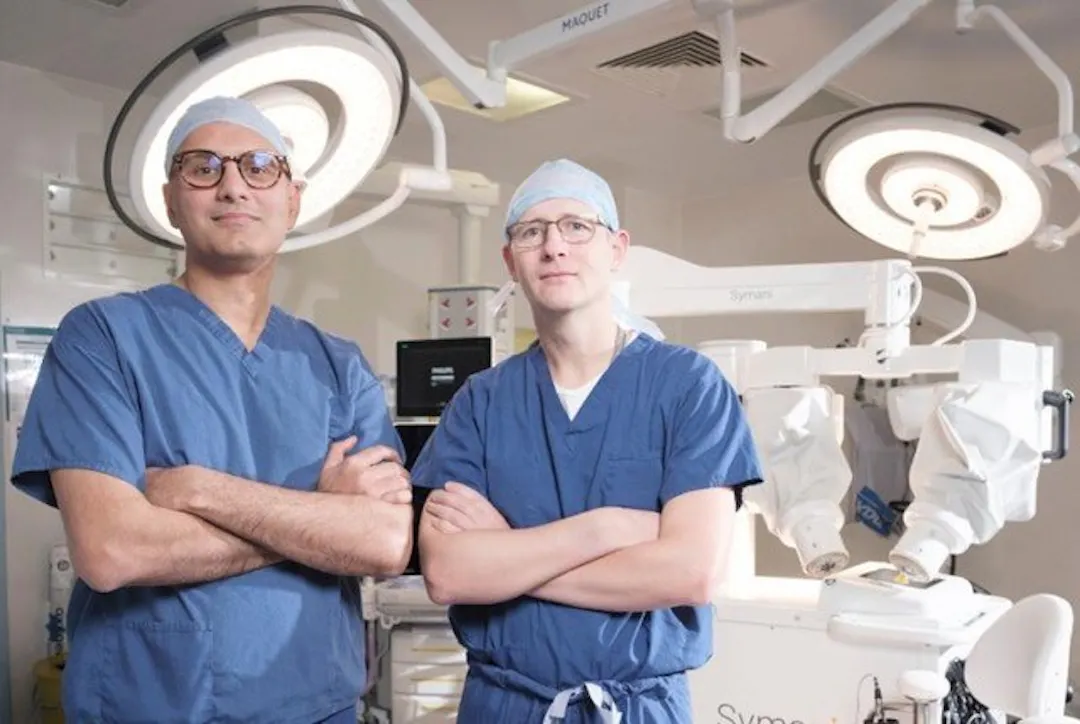
We are aiming to understand patients’ and carers’ views on the use of robotic-assisted microsurgery in cancer-related reconstructive surgery and lymphatic surgery.
Robotic assistance is increasingly being used in different areas of surgery. Before developing services or future research studies in this area, we would like to understand what patients and the public already know about robotic-assisted surgery, how they feel about it, and what information they would want before considering it as part of their care.
We are particularly interested in hearing what matters most to patients when new robotic -surgical technologies are introduced. This includes understanding potential concerns, expectations, information needs, and views on taking part in future research.
Feedback from this work will help us develop patient information, shape future research questions, and ensure that any future studies are designed around patient needs. It will also help us understand whether views differ between different types of surgery, such as major reconstructive surgery and surgery for lymphoedema.
We would like to hear from patients, carers and members of the public, including people with experience of breast reconstruction, lymphoedema, melanoma, sarcoma, head and neck cancer, or other cancer-related surgery.
If you would like to join a patient advisory group please email [email protected]. This group will meet every 3 months, mostly online, and provide ongoing input into the development of robotic microsurgery services and research.
We are aiming to understand patients’ and carers’ views on the use of robotic-assisted microsurgery in cancer-related reconstructive surgery and lymphatic surgery.
Robotic assistance is increasingly being used in different areas of surgery. Before developing services or future research studies in this area, we would like to understand what patients and the public already know about robotic-assisted surgery, how they feel about it, and what information they would want before considering it as part of their care.
We are particularly interested in hearing what matters most to patients when new robotic -surgical technologies are introduced. This includes understanding potential concerns, expectations, information needs, and views on taking part in future research.
Feedback from this work will help us develop patient information, shape future research questions, and ensure that any future studies are designed around patient needs. It will also help us understand whether views differ between different types of surgery, such as major reconstructive surgery and surgery for lymphoedema.
We would like to hear from patients, carers and members of the public, including people with experience of breast reconstruction, lymphoedema, melanoma, sarcoma, head and neck cancer, or other cancer-related surgery.
If you would like to join a patient advisory group please email [email protected]. This group will meet every 3 months, mostly online, and provide ongoing input into the development of robotic microsurgery services and research.
We are interested in your views on robotic-assisted surgery. Your answers will help us understand what patients and the public already know, what information they would want, and what concerns or expectations they may have. There are no right or wrong answers.
Share What are your views on robotic-assisted surgery? on FacebookShare What are your views on robotic-assisted surgery? on X (formerly Twitter)Share What are your views on robotic-assisted surgery? on LinkedinEmail What are your views on robotic-assisted surgery? link
We would like to hear from patients, carers and members of the public, including people with experience of breast reconstruction, lymphoedema, melanoma, sarcoma, head and neck cancer, or other cancer-related surgery.
We are particularly keen to hear from people whose views are often less represented, including those who may have had difficult recoveries from cancer and surgery, people who decided not to have reconstructive breast surgery, older patients, people from different ethnic backgrounds, and people who may find it harder to understand medical information, use online forms, or attend hospital appointments.